Rockland, MA · Plymouth County
Hydrostatic Pressure Water Removal in Rockland, MASlab Leak Water Removal & Basement Hydrostatic Pressure Flooding
Hydrostatic Pressure Water Removal in Rockland covers groundwater intrusion mitigation, wet subfloor removal and crawl space water extraction.
Answered 24/7
Local Pros for Hydrostatic Pressure Water Removal in Rockland
In Rockland, a damp crawl space from groundwater affects the air in the whole house and can draw pests and mold if it is not dried fully.
In Rockland and nearby Abington, Whitman and Weymouth, soaked soil can push water into basements and crawl spaces. Local hydrostatic pressure experts extract the water and dry the structure.
Comprehensive Hydrostatic Pressure Water Removal Solutions
Slab Leak Water Removal
For slab leaks in Rockland, hydrostatic pressure experts remove the water and dry the slab and flooring above it.
Basement Hydrostatic Pressure Flooding
Water pushed in by soil pressure is common in lower levels in Rockland. The experts extract the standing water first, then note where it came in so a contractor can look at it.
Groundwater Intrusion Mitigation
Repeated groundwater problems need two steps: remove the water now, then have a contractor look at drainage, grading or downspouts sending water to the foundation.
Structural Drying After Intrusion
Wet framing and subfloor need to be dried, not just the floor surface. The experts set up a drying plan and check readings until the materials are dry.
Sump Pump Failure Cleanup
A failed sump pump often floods a crawl space or lower level. The experts remove the water and explain what needs drying and what a plumber should check.
Signs of Groundwater Intrusion Requiring Hydrostatic Pressure Water Removal
High Indoor Humidity Levels
High humidity in lower levels that does not go away can mean water is seeping through the foundation.
Damp or Musty Odors in Basement
A constant musty smell in the lower level often means groundwater is getting in somewhere.
Gurgling Sounds From Floor Drains
Gurgling floor drains during heavy rain can mean water pressure is building in the drain lines around the house.
Efflorescence on Concrete Surfaces
White, chalky deposits on foundation walls or the slab show water has been pushing through the concrete.
How Hydrostatic Pressure Water Removal Works in Rockland
Step 1: Emergency Water Extraction
The experts use truck-mounted pumps to remove standing water from basements and crawl spaces.
Step 2: Foundation Leak Assessment
An inspection finds where groundwater is getting in and maps how far the water spread.
Step 3: Structural Drying Deployment
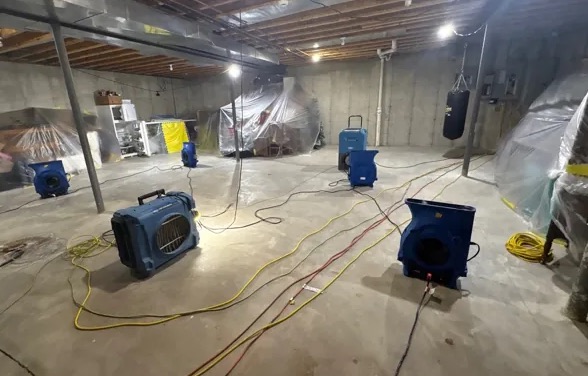
Industrial air movers and dehumidifiers are positioned strategically to dry wall cavities, subfloors, and structural members until readings return to normal.
Step 4: Final Moisture Verification
Professionals use moisture meters and sensors to confirm all materials are dry.
Sources Requiring Hydrostatic Pressure Water Removal
Plumbing Leaks Under the Slab
A broken water line under the slab keeps feeding water up through the floor.
Soil Expansion and Contraction
Clay soil swells when wet, adding pressure on foundation walls and opening paths for water.
Heavy or Prolonged Rainfall
Long periods of rain soak the soil, and the water presses against the foundation until it finds a way in.
Foundation Settlement and Cracks
As a foundation settles, cracks form and give groundwater a direct path inside.
Hydrostatic Pressure Water Removal for Homes and Businesses in Rockland
Residential Hydrostatic Pressure Water Removal
In homes, water through the foundation can reach framing and wiring in the lower level. The experts remove the water and dry the structure, and a foundation contractor handles any cracks.
Commercial Hydrostatic Pressure Water Removal
Warehouses and plants on slab floors can take on water from below. Industrial equipment removes it and dries the large floor area so work can resume.
Hydrostatic Pressure Water Removal: Why DIY Falls Short
Checking known foundation cracks for changes in width or new moisture is a reasonable DIY task. If water starts flowing through any crack, stop monitoring and call for water removal and repair right away.
Understanding Hydrostatic Pressure Water Removal Expenses
Groundwater cleanup cost around Abington, Whitman and Weymouth depends on how strong the pressure is, which materials are affected and how much waterproofing repair is needed.
Required Drying Time
The number of days the structure takes to dry is a large part of the cost.
Structural Complexity
Tight crawl spaces and complex foundations make water removal and drying slower.
Intrusion Severity
How deep the water is and how much keeps coming in decide how long extraction takes.
Does Insurance Cover Hydrostatic Pressure Water Removal?
Whether insurance covers foundation water removal depends on how your policy treats groundwater. The pros document the flooded area and the damage, and your insurer makes the final call.
Why Choose Local Pros for Hydrostatic Pressure Water Removal in Rockland
Sump Pump System Evaluation
After a sump pump failure, the pros help you understand why it failed so a plumber can fix it.
Targeted Groundwater Extraction
Equipment made for tight spaces removes water from crawl spaces and around slabs.
Detailed Documentation
Photos and moisture logs of the work are kept to support your insurance claim.
24/7 Emergency Hydrostatic Pressure Water Removal in Rockland
Drying after groundwater gets in starts with a call to (617) 284-0766. The experts are available 24/7 in Rockland to remove the water and set up drying.
Call Now (617) 284-0766Areas Served for Hydrostatic Pressure Water Removal Near Rockland
Homeowners in Rockland and nearby Abington, Whitman and Weymouth can get help with flooded lower levels and wet subfloors.
- Hydrostatic Pressure Water Removal in Abington
- Hydrostatic Pressure Water Removal in Whitman
- Hydrostatic Pressure Water Removal in Weymouth
- Hydrostatic Pressure Water Removal in Randolph
- Hydrostatic Pressure Water Removal in Braintree
- Hydrostatic Pressure Water Removal in Hingham
- Hydrostatic Pressure Water Removal in Scituate
- Hydrostatic Pressure Water Removal in Stoughton
- Emergency Damage Restoration in 02370
- Storm Damage Restoration in 02370
- Water Damage Restoration in 02370
- Water Extraction Service in 02370
- Water Leak Detection in 02370
- Water Removal Service in 02370
Hydrostatic Pressure Water Removal FAQs
Will drying stop water from coming back?
No. Drying fixes the damage that is already there. Keeping water out takes drainage, grading or waterproofing work by a contractor.
Why is subfloor drying services important after flooding?
Drying the subfloor keeps it from rotting and growing mold, which protects the floor system above it.
What causes foundation crack water infiltration?
Usually water pressure from soaked soil, or settlement cracks that give groundwater a path into the building.
What equipment is used for groundwater extraction?
Groundwater extraction uses submersible pumps for deep water, wet-dry vacuums for shallow flooding, and specialized extractors for under-slab water removal.
How long does drying take after groundwater comes in?
Most jobs take several days of drying. Waterproofing repairs, if needed, are a separate job for a waterproofing contractor.